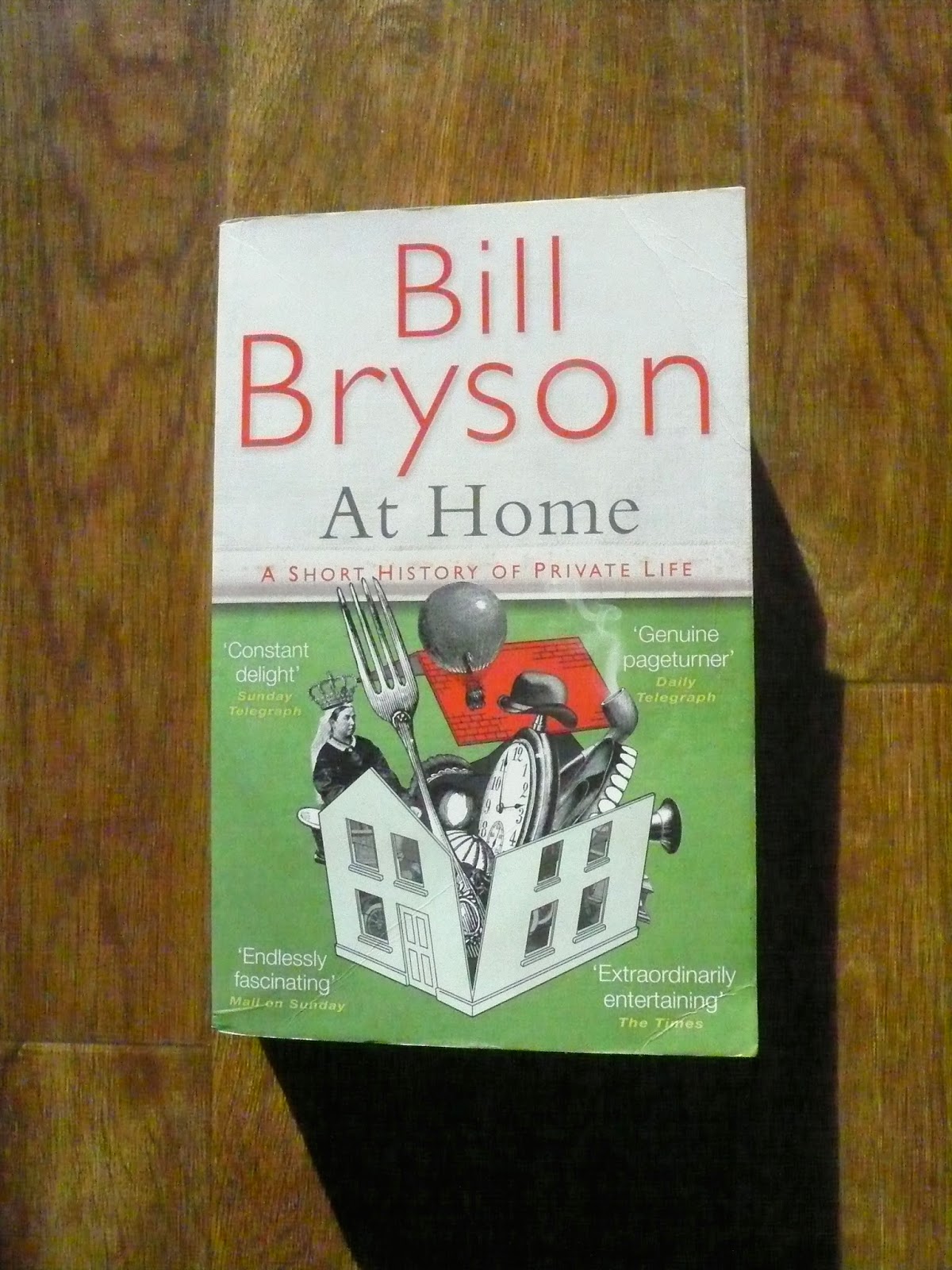
‘At Home’ by Bill Bryson

We’re all about lovely things and what could be more lovely than a good book? So today we bring you our first book review! And apologies for it not being a new book – it was first published in 2010 – but it is well worth reading by anyone interested in how our homes have come to be the way they are. 

A much read copy!

‘At Home’ by Bill Bryson is subtitled ‘A Short History of Private Life’ and is based on the idea that history is made up of people getting on with their normal activities, most of which take place at home. So, taking his own home (a Victorian rectory in Norfolk) as a starting point, Bill Bryson explores how our modern domestic life has come about.

For example, in the eighteenth century it became possible for people to have cheaper and brighter fabrics than ever before. It was also possible to produce fabric in greater widths and these advances combined meant more upholstered furniture. Now alternatives to leather, previously the best material for upholstery, were available. However, the custom was that meals would be eaten at small tables set up wherever was convenient at the time – and householders realised that this would lead to spills and stains on their new, fashionable, expensive furniture. The solution was to create a dining room, first mentioned in a dictionary in 1755. 


Maybe – and this isn’t suggested in the book – one reason why people don’t use dining rooms so much now is that spills and stains aren’t such a problem. Furniture is cheaper. We have washing machines, laundry detergent and a whole range of fabric protecting and stain removing products. And leather upholstery is fashionable again!


This book is full of information on many subjects: how domestic fridges killed the international ice trade; how construction methods can dictate room size and therefore use; Thomas Edison’s attempt to design concrete houses complete with concrete furniture… The 28 pages of index show the variety. Best of all, the writing is typical Bill Bryson so reading it is like listening to a clever and amusing friend and that’s one of our favourite things. He would definitely be on our fantasy dinner party guest list, wherever the table was.Available, as they say, from all good bookshops – the local, independent ones as well as the big on-line ones!

Oversize footstool – Leisure Footstools review

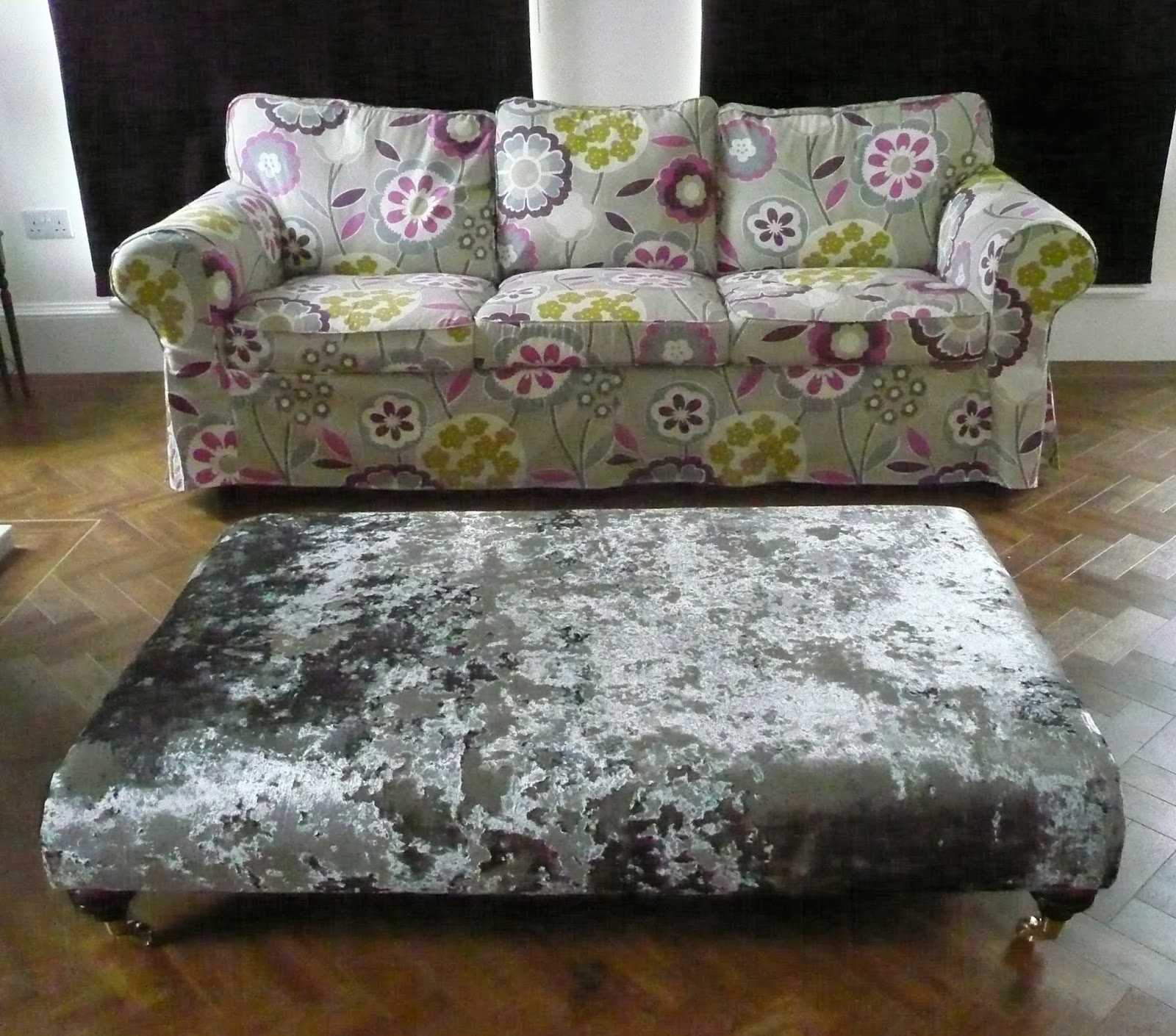
Do you remember a while ago we got new sofa covers? Well, what they really needed was an oversize footstool to set them off and above is the one we chose. Actually, we commissioned it – doesn’t that sound fancy?

There are lots available and they are all very nice but nothing was quite right until we discovered Leisure Footstools, who sell through ebay (check out their ebay shop here). They came close to what we were looking for and a couple of emails, some fabric samples and a phone call later, the lovely Chris had agreed to make just what we wanted – 130cm x 80cm in pewter coloured crushed velvet with wooden legs and brass castors. About 10 days later, here it is!

We’re delighted with the end result and the service was great – helpful, friendly and quick. The parcel arrived very well packaged to protect it in transit. (Oh, and let’s not forget the price – excellent value for the quality of the product).

So if you’ll excuse us, these feet aren’t going to put themselves up…

True colours of early autumn

So that’s it then. September has started, summer is over. People usually associates this time of year with a subtle palette of browns, reds and golds, but we’d like to suggest a rethink, prompted by Smythson, the luxury leather goods people.

This picture is a mood board for the Autumn/Winter collection from the blog on their site (so just to be absolutely clear, Smythson own the copyright for it):

Love the purples and greens – always been a favourite combination of ours, but they are not the traditional ‘autumn’ (or ‘fall’ – we’re bilingual!) colours. They do give a better reflection of what is happening in the natural world right now, though. Right now, the leaves might be starting to turn but it’s going to be a long time before their colours really show. The vegetable shops are full of delicious seasonal produce in gorgeous hues of purple, acid green and sulphur yellow:

They look good together and not just in the vegetable rack. So just for now, step away from the terracotta. Eschew the ochre. Leave the stone unturned. Summer might be over but there are plenty of vibrant colours and exciting combinations from which to take inspiration!


Gorgeous stair risers

First of all, an apology because we could just as well have called this ‘The One With The Bad Photography Part II’. But here’s the background…

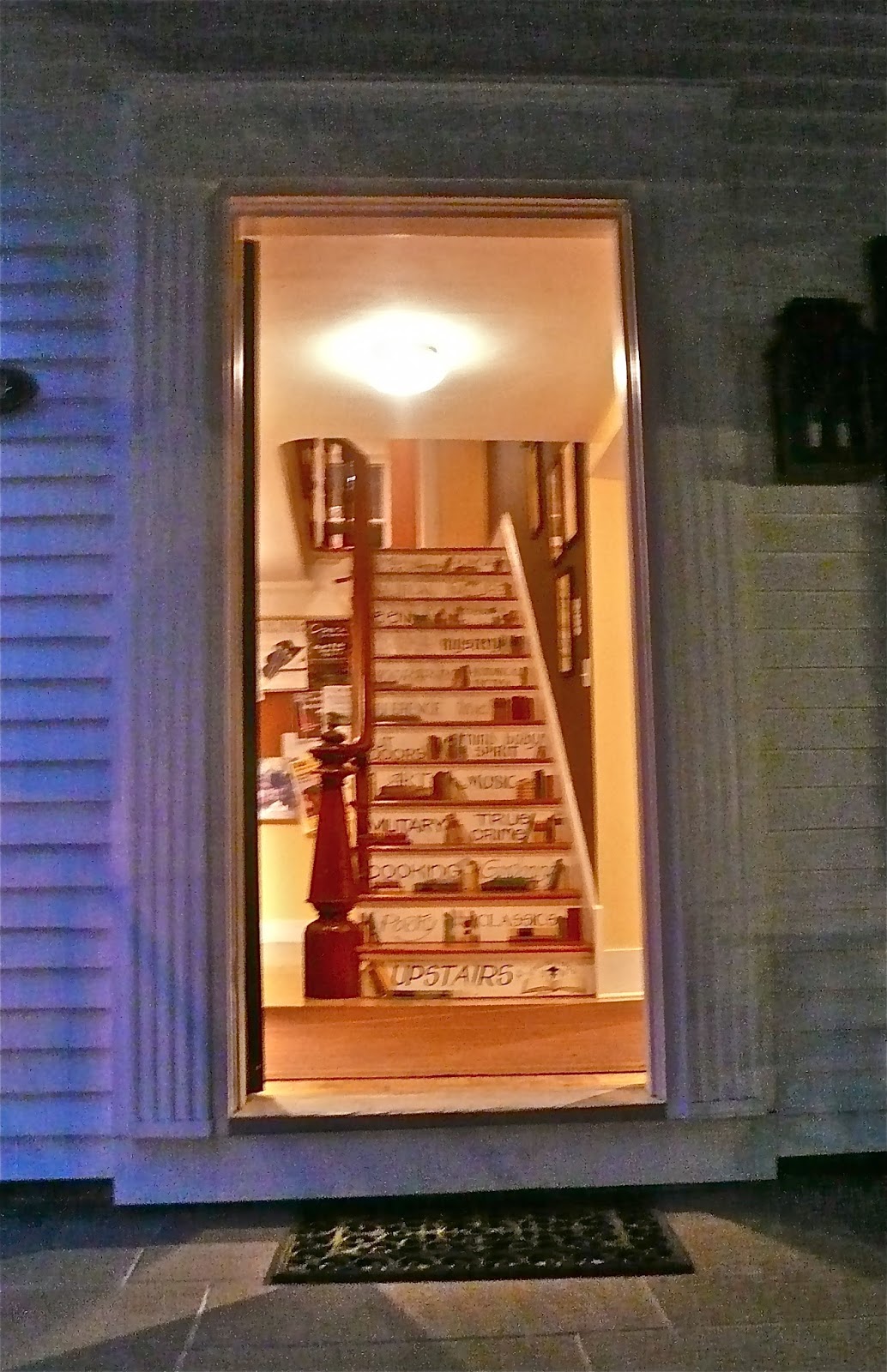
We saw this lovely staircase at the Edgartown Bookshop in Edgartown, MA on the way to dinner one evening and had to grab a picture then and there because there wasn’t going to be a better opportunity!

If you look at their website you can see a much better picture (turns out that good lighting, a decent camera and adequate time does wonders for photography – who knew?).

Anyway,  the idea is that the risers (the parts of the stair that go up, as oppose to the treads, which are the flat bits) are decorated like shelves. Their are piles of books on them and in a variety of suitable fonts are the department titles, like ‘travel’, ‘mystery’ and ‘historical fiction’. It looks great and is a clever way to decorate a staircase which really dominates the view from the door of the shop.

Inspired by this we checked out Etsy and a search on ‘stair decal’ or ‘stair sticker’ brings up a few other ideas such as chevrons, numbers, inspirational sayings and patterns that look like ceramic tiles. There are also some clever people who can custom-make decals for you! But even just painting the risers in a colour that contrasts with the walls or different shades of the same colour could look good too. Lots of possibilities for one of the most used and under-decorated parts of the house!

Meet Luci

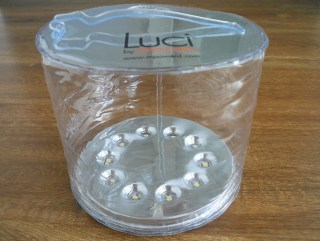
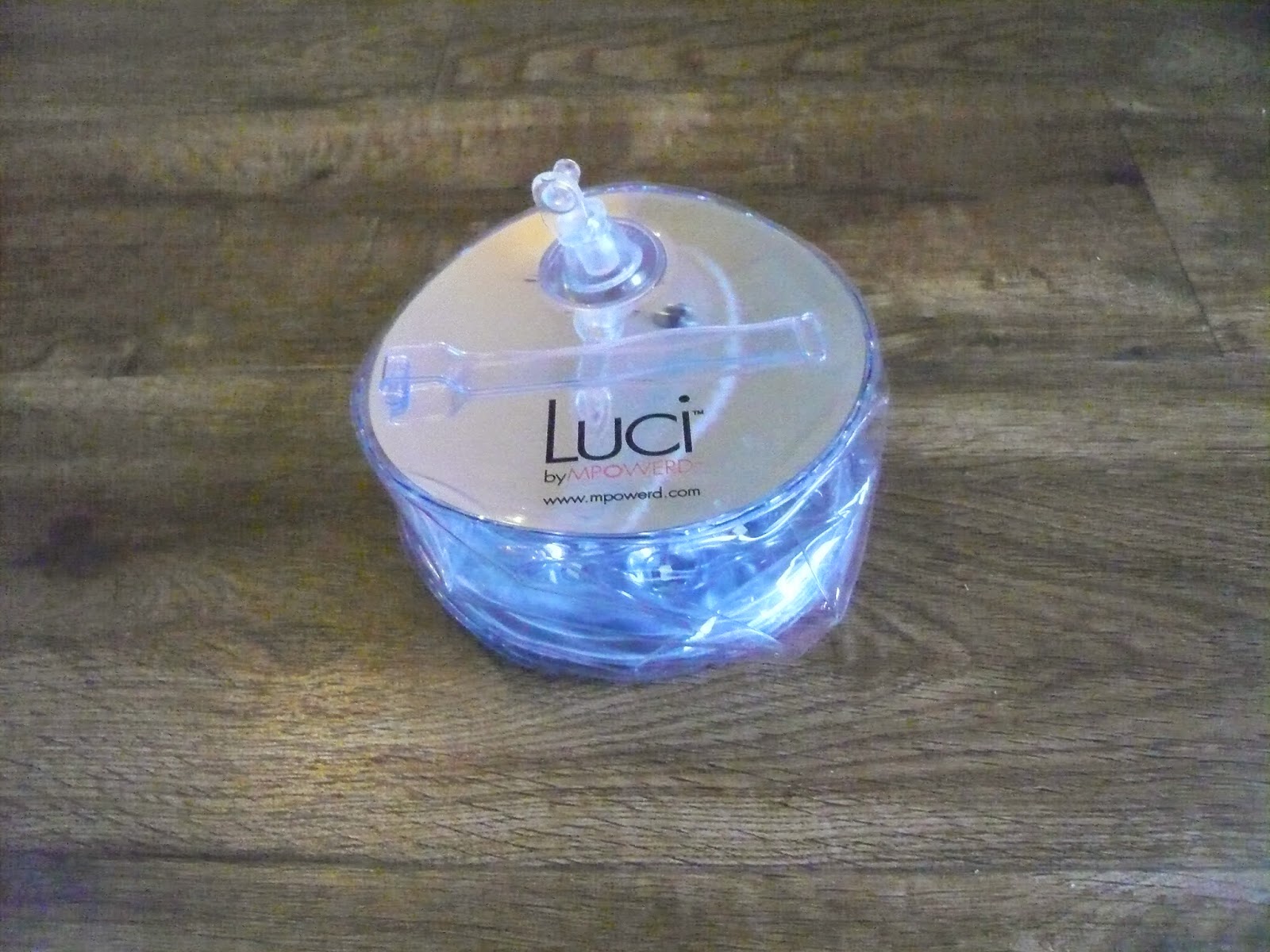
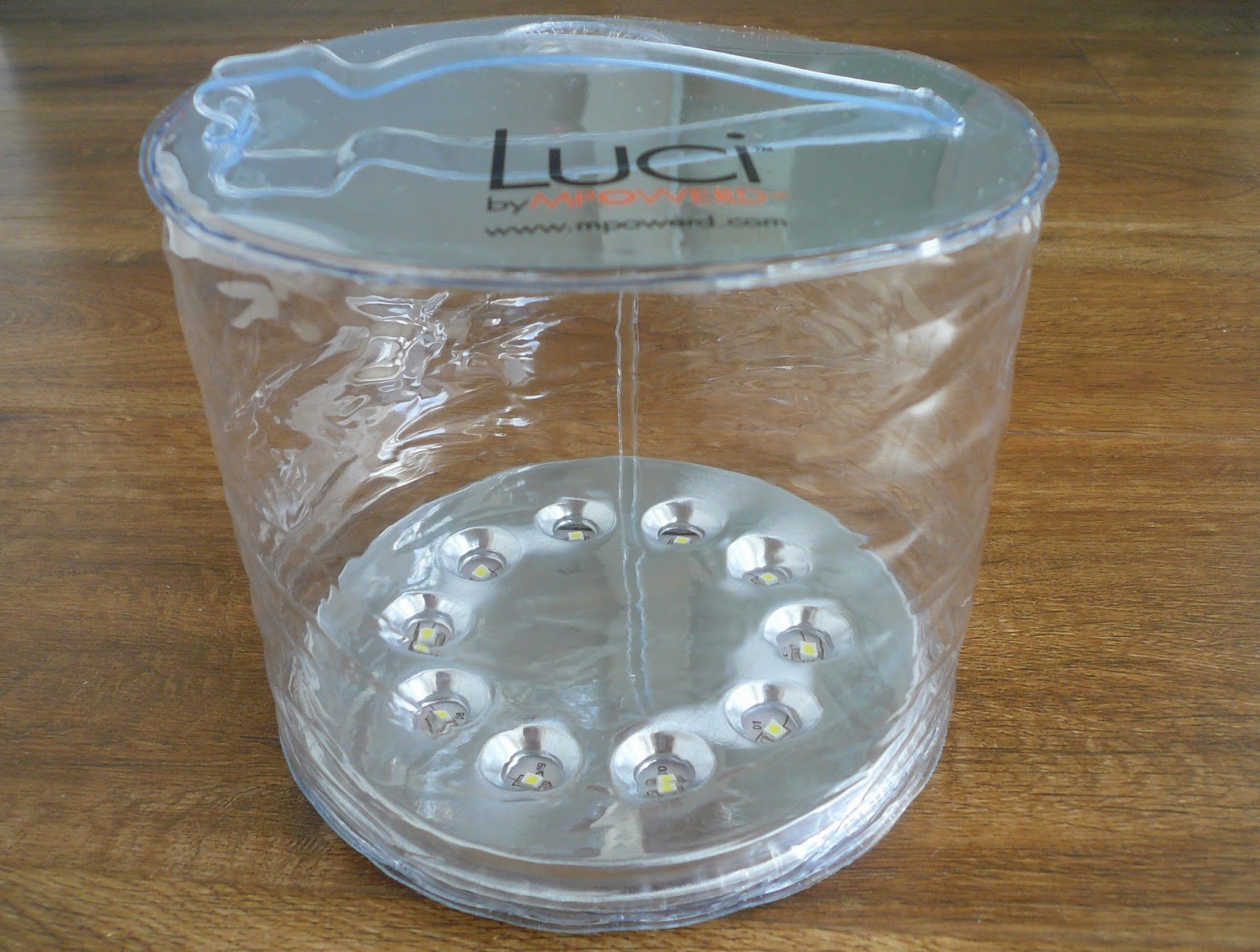
Sometimes you come across an object that might not be the prettiest thing ever, but the fact that it is such a good idea and so well designed gives it a charm of its own. And we were charmed by Luci, an inflatable solar lantern.

Deflated

Inflated

Such a simple idea from some some clever people at a company called Mpowered. The motivation behind it is to empower people with affordable light. This means that people all over the world who have no electricity, or whose supply is erratic, can study and work cheaply in a clean, safe environment (no toxic fumes or fire risk from kerosene lanterns).

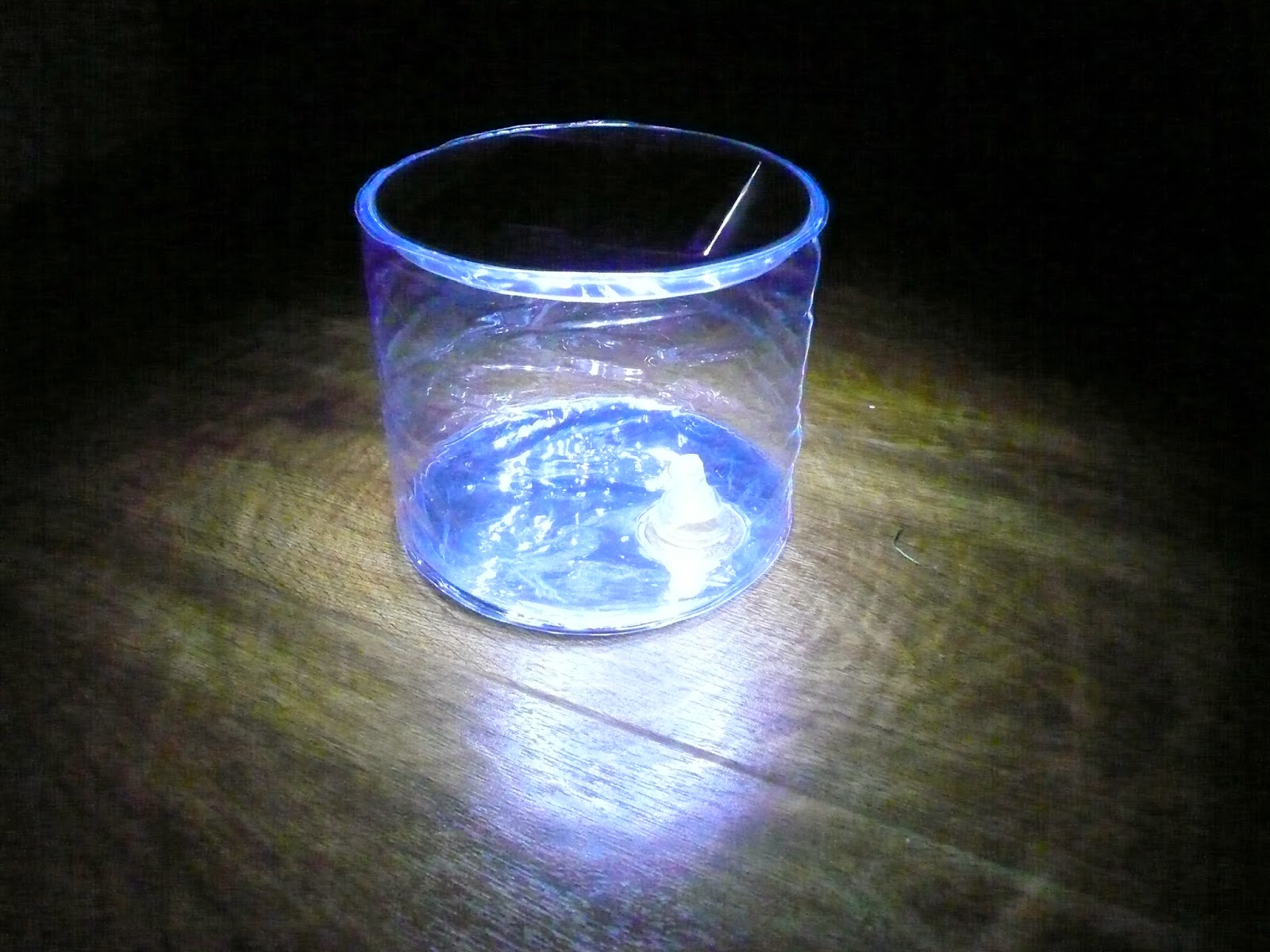
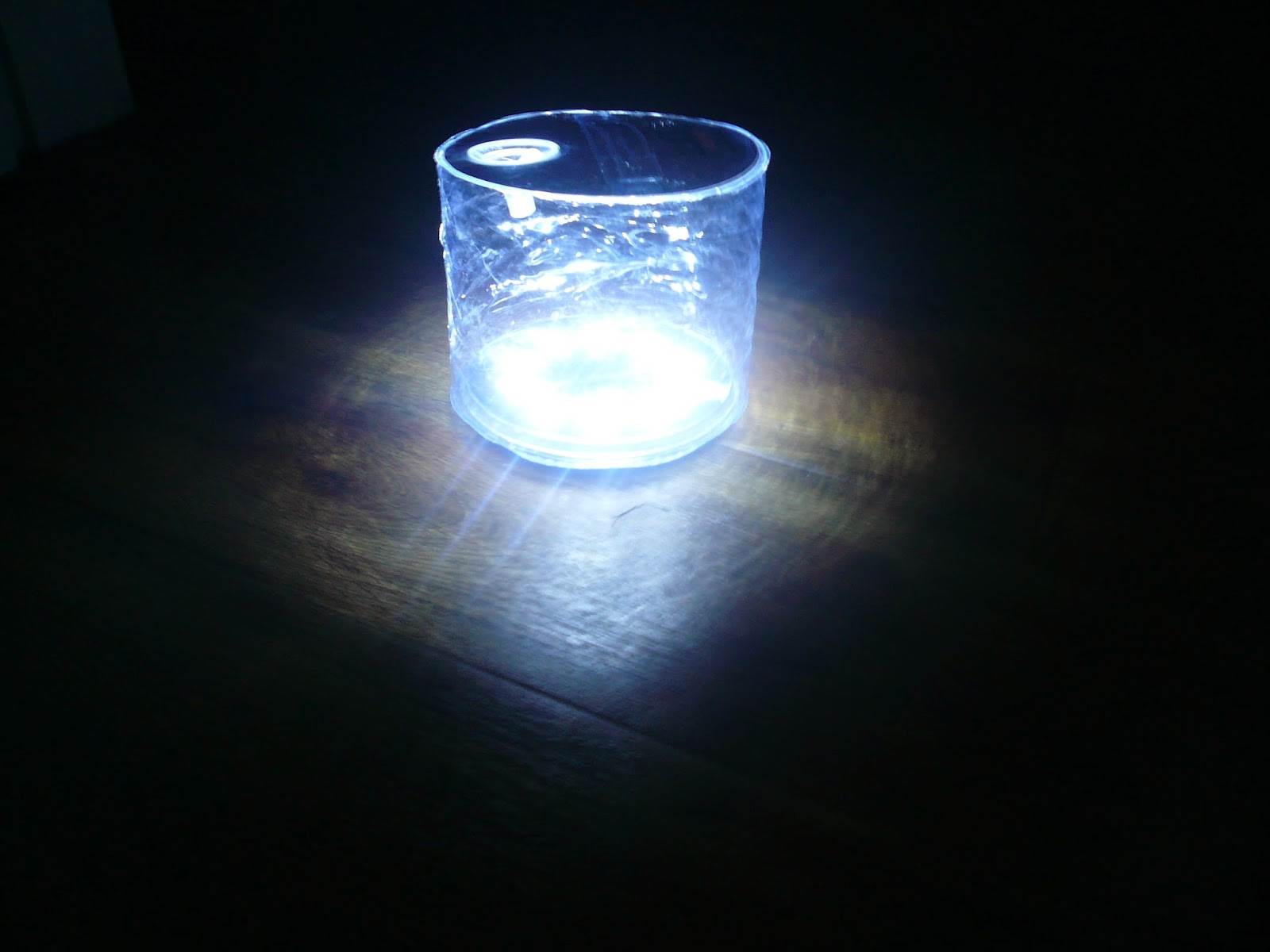
The lamp can be used with the light source either at the top:

Or at the bottom:

Luci takes 8 hours to charge and should then give 12 hours of light on the lowest setting (there are two, plus a flash function). Unlike a lot of solar lanterns, there is an on and off button, so the energy from a charge is stored if it isn’t needed. What you probably can’t tell from the pictures (taking pictures in the dark is a job for the professionals – it’s hard!) is that the light is enough to illuminate a square metre, so plenty of room to read, study or work. Not to mention that, sadly, light keeps a lot of people safer than the dark.

And those of us lucky enough to have a reliable electricity supply can have a useful and attractive lantern for our decks, patios and outdoor parties. Luci is waterproof, so you can float them in pools and has handles top and bottom for suspension. There is the clear version, which is shown here, or a frosted effect one. And as well as all that good stuff, they are bringing out a colour-changing version, the Luci Aura! There is no release date yet but you can sign up on the web site to be notified.

Mpowered work with all kinds of organisations all over the world to promote solar justice and have a scheme that lets people donate a lantern to those who need it. In the US the lanterns are about $15. You can also buy them in the UK for about £20.
Jonathan Adler – and 10% off!

Look what some lovely friends gave us. (And they really are lovely – not just because they gave us a present!)

These cute bottle stoppers are from Jonathan Adler – an American potter and designer whose company is committed to ‘impeccable craftsmanship and irreverent luxury’, something we support whole-heartedly. 

There are two Jonathan Adler shops in London selling his wonderful homeware, accessories and gifts. You can also shop online here. In fact, we just checked the website and got the chance to sign up for a 10% discount on our first purchase. That’s worth harpooning!

The website also showcases some of the amazing interior design projects that the company has undertaken… read and drool!

Sea Fan

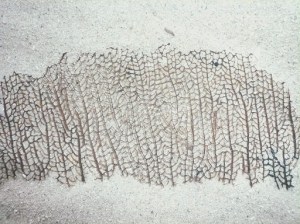
This picture is of a piece of black sea fan, found on the beach. (sea fans are protected under CITES but this is a broken piece that washed up and was left on the beach, so no international treaties were broken in the making of this blog post).

Anyway, we thought the pattern was fascinating (we do some of our best thinking after a lunchtime mojito…) Strangely for something found on the coast in summer, it looks like bare trees in winter. And the pattern and colour would be ideal for the new bedroom curtains we are planning – so if you know of any cream and black fabric with a pattern like this, please let us know!

Beautiful shelves

It’s quite a simple idea to arrange books on shelves by colour, like this rainbow arrangement:

(We’ve tried something similar but in practice, you are rather limited by the books you have available. And most of ours have pesky writing on the spines in a variety of fonts. Which is great for when you are trying to locate something but does affect the aesthetic!)

Anyway, this beautiful arrangement was in the Sunday Times Style Magazine 13 July 2014:

As you can see, it doesn’t follow the spectrum strictly, but it looks beautiful and something that might – just – be achievable on a practical, domestic basis. Definitely an inspiration for when the nights draw in and the house needs a new look.

Cutlery drainer lightshade

We’ve always fancied a cheese grater lightshade for the kitchen – couldn’t find a picture to use in this blog, but if you check out ‘Hingham House’ on Pinterest you can see one. Basically, it’s a lightshade, made out of a cheese grater. Simple as that! So the plan was to get a grater and just drill a hole through the handle, pass the cord through and attach the light fitting bit so that the bulb hangs in the body of the grater. But there was a (major) problem… couldn’t find a cheese grater that was big enough to get a light fixture and bulb in! They all seemed to be too narrow at the top.

The next logical step seemed to be thinking about what items of stainless steel kitchenalia ARE big enough to fit a lightbulb in – and so the cutlery drainer light shade was born! (We did think about using a colander, but decided that the drainer would obscure more of the bulb itself from view and that would be good because lightbulbs are not very attractive.)

Admittedly, it doesn’t have the same immediate impact as the cheese grater, but it does make for a cheap, original and stylish (is it OK if we say that?) shade in the same vein.